

Compliance can often seem overwhelming for businesses, especially when requirements come from different regulations, standards, customers, and internal expectations. However, compliance becomes much more manageable when it is approached as a structured and practical process rather than a purely administrative burden. The first step is understanding which obligations actually apply to the business based on its industry, location, services, and the type of data it handles..
A simple way to strengthen compliance is to start with clarity. Businesses should identify their main requirements, assign responsibilities, and document the key policies and controls that support them. This helps avoid confusion and reduces the risk of gaps caused by unclear ownership or inconsistent processes. Even small organizations benefit from having a clear view of who is responsible for what and how compliance activities are monitored.
Another useful tip is to integrate compliance into day-to-day operations instead of treating it as a separate exercise. Controls, approvals, reviews, training, and evidence collection should ideally become part of normal business routines. When compliance is embedded into existing processes, it is easier to maintain, less disruptive, and more likely to be followed consistently over time.
Businesses should also focus on evidence and continuous improvement. It is not enough to say that a policy exists or that a control has been implemented. Organizations need to be able to demonstrate how compliance is supported in practice through records, reviews, actions, and follow-up. Regular assessments and internal checks can help identify weaknesses early and keep compliance efforts aligned with changing expectations.
Wrapping Up with Key Insights
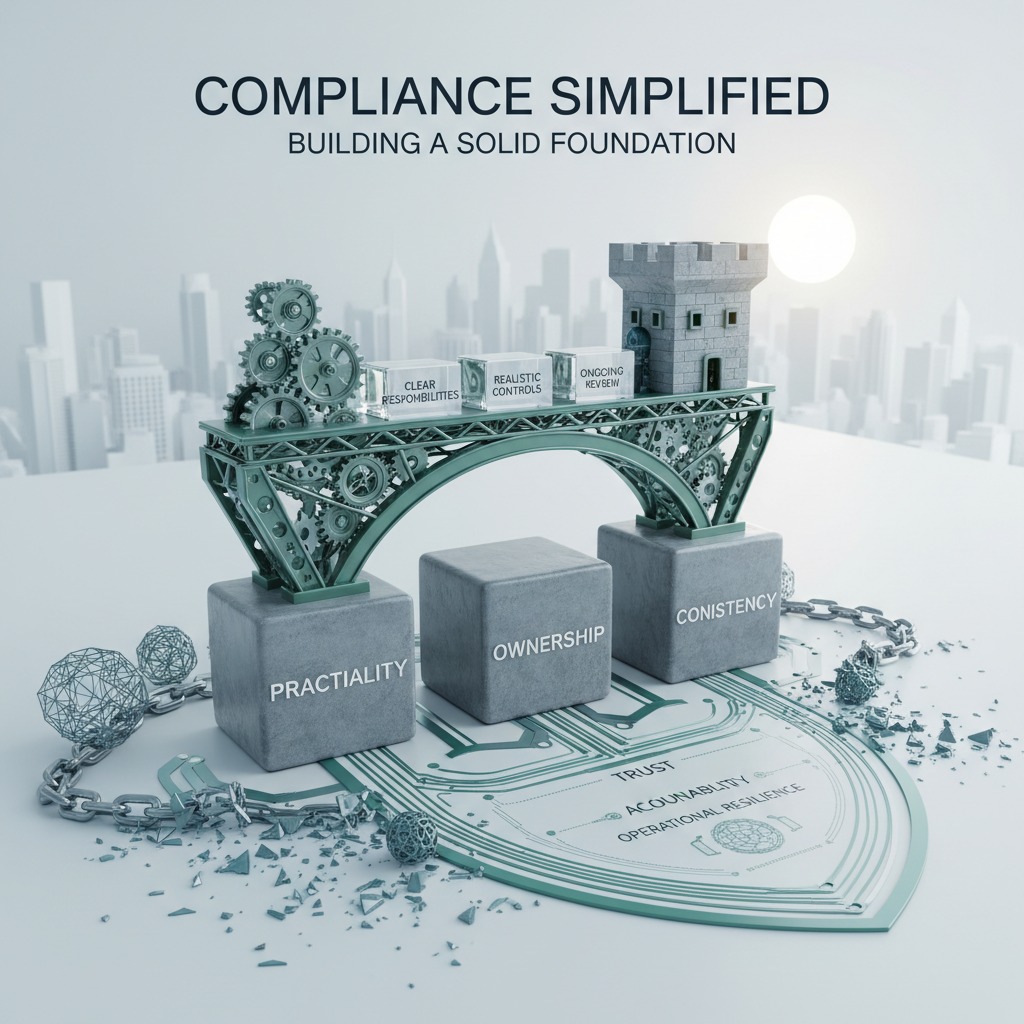
Ultimately, compliance becomes simpler when businesses prioritize practicality, ownership, and consistency. Rather than aiming for excessive complexity, organizations should focus on building a solid foundation of clear responsibilities, realistic controls, and ongoing review. A well-structured compliance approach not only reduces risk, but also strengthens trust, accountability, and operational resilience.
Leave a Reply